
Hexagon AB is a global technology giant specializing in autonomous systems that use “reality capture” and digital twins to turn real-world problems into data-driven solutions. In 2022, I was brought on to help with a full redesign of hexagon.com, bringing together a massively broad offering of products and services under a single global brand experience. I partnered with Hexagon’s internal team to help shape the site’s entire content strategy, ensuring the new platform could clearly communicate Hexagon’s value to a wide range of audiences without getting lost in the depth of a giant portfolio.
HEXAGON.com
THE PROBLEM
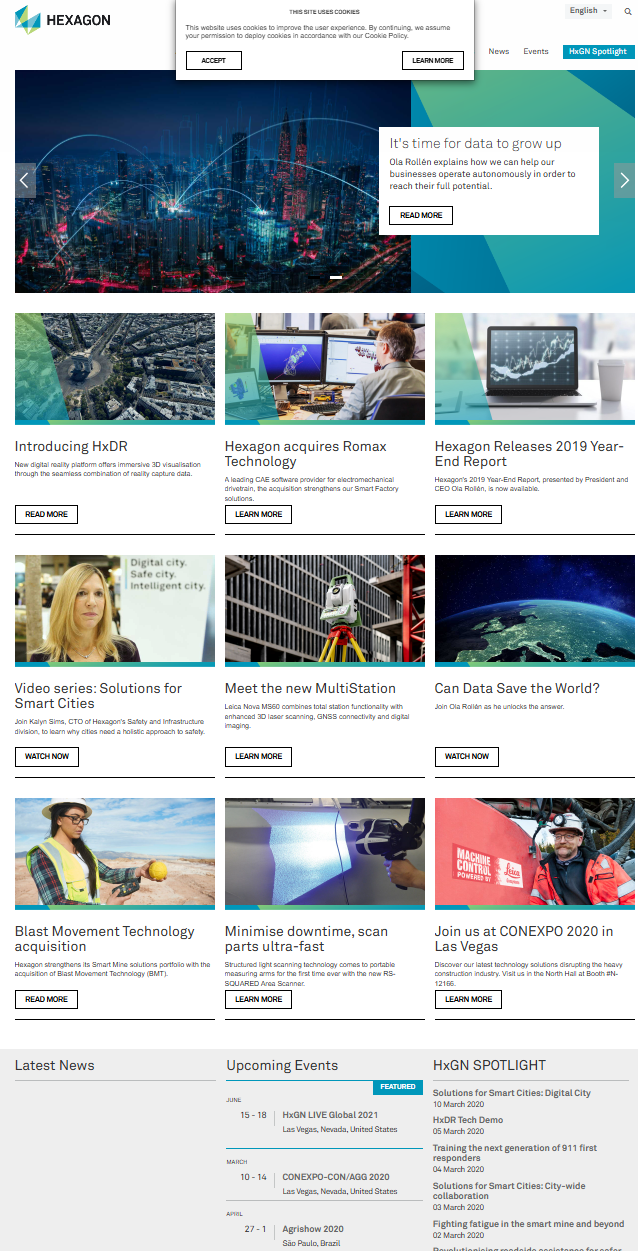
To put it plainly, Hexagon’s old site just wasn’t what you’d expect from an autonomous tech expert. The site was still a manually-updated grid that inundated visitors with information, but still required a lot of digging to find the information relevant to a given visitor’s needs. And let’s be honest, those grey squares don’t exactly scream “tech.”
Prior to this redesign, Hexagon operated more as a diversified group of acquired companies, with each division maintaining its own mini-site. This meant that users would often be met with different visual styles, navigation structures, and messaging depending on where they went. A user looking for a solution in "Autonomy" might find themselves bouncing between three different subdomains, with no clear path to their desired destination.
But outside of aesthetic and UX issues, we had one other glaring problem to fix: this site was leaving money on the table. Hexagon’s customer base is full of clients who can benefit from additional products, but the old site made it difficult for that kind of cross-divisional discovery to happen at all.
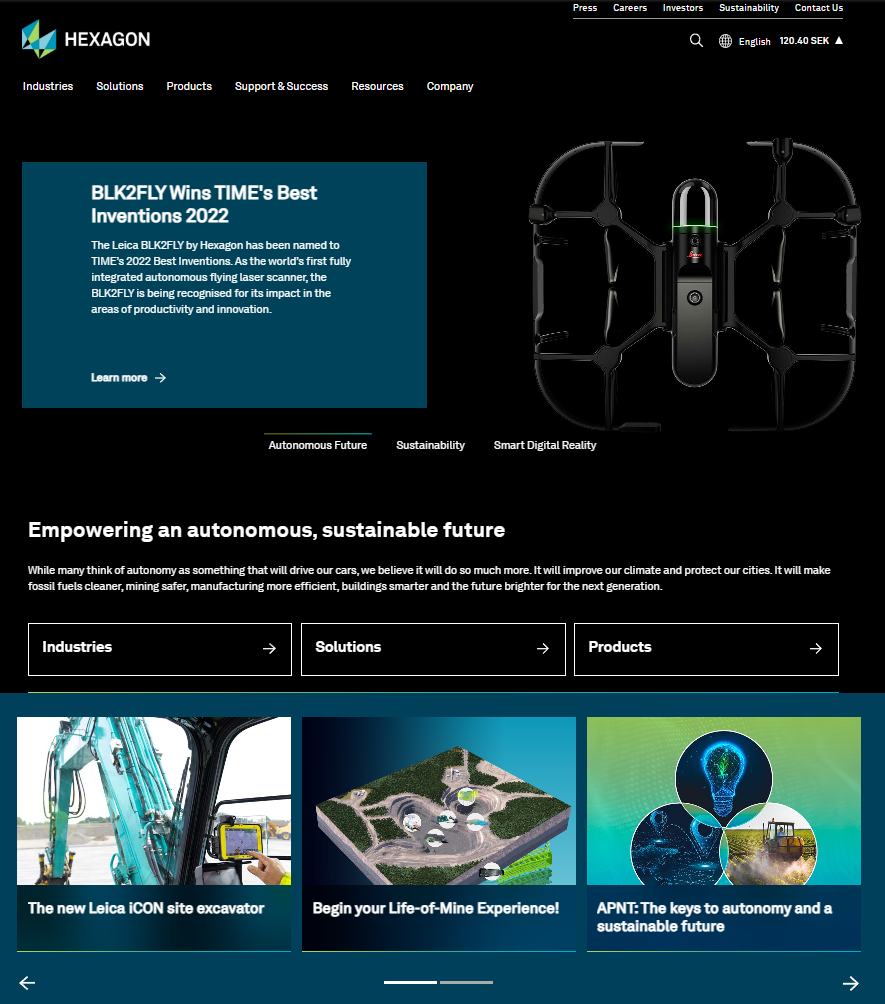
To transform a fragmented "house of brands" into a cohesive digital experience, we moved away from the divisional-silo approach and toward a scalable, responsive, and user-centric architecture. After a comprehensive audit of the existing site, cataloging thousands of pages across multiple global divisions, we moved forward with a new architecture focused on discoverability. Instead of forcing users to choose a product or read a blog that wasn’t relevant to them, we mapped the navigation to user needs.
A new higher-level taxonomy allowed users to browse by industry (e.g., Mining, Aerospace) and solution type rather than corporate division, and we developed a strategic migration plan from the old site that prioritized the most high-value pages, ensuring SEO equity while transitioning to a simplified URL structure.
Finally, we prioritized a mobile-first, responsive content approach that spoke to Hexagon customers at every level, from field engineers making reports on tablets to executives on the go. We stripped away rigid desktop layouts in favor of modular content blocks that remained readable and functional on any device. This presented an additional challenge ensuring that complex technical data tables and product specs were optimized for smaller screens without losing any critical details.
THE SOLUTION
THE RESULT
The redesign didn't just change how the site looked—it changed how people interacted with Hexagon. By moving to a responsive, unified architecture, we turned a fragmented digital footprint into a high-performing lead-generation machine that, much like Hexagon’s offerings, did all the hard work for them. The new site was well-received by Hexagon’s audience, driving a 7% organic growth rate by unifying the legacy offerings into more high-conversion pathways. The new modular IA and responsive design created a scalable framework that allowed the global team to launch and integrate 450+ product updates annually with consistent branding and zero structural downtime.
The “One Hexagon” initiative and site redesign laid the groundwork for the later launch of the Nexus platform, and helped Hexagon blow past its goal of 30%+ operating margins by pivoting the site from hardware sales to software-ecosystem storytelling by 2026. They reached 31.1% in Q4 2024, immediately following the release of the redesign.